TWIST – installation contextuelle, entre texte, couleur et mémoire
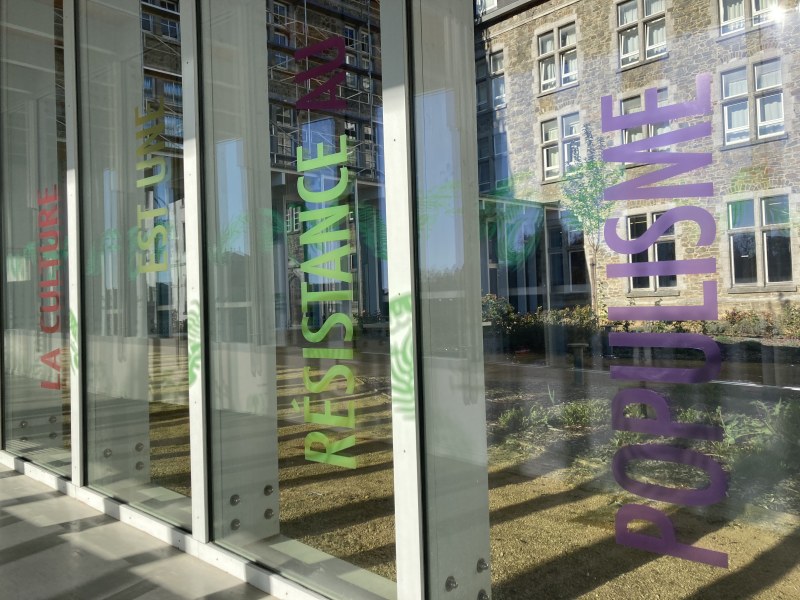
À l’occasion de l’inauguration du Pôle Culture de Bastogne, Djos Janssens présente TWIST, une installation temporaire conçue spécifiquement pour l'aile Van Gheluwe du Pôle Culture de Bastogne. Cette œuvre in situ, visible depuis l’extérieur du bâtiment, capte l’attention du public tout en accompagnant la déambulation des visiteurs à l’intérieur. Elle célèbre la diversité des arts dans une dynamique joyeuse, inclusive et ouverte à tous.
Ce projet a vu le jour suite à un appel à projet lancé par la Ville de Bastogne dans le cadre de l’ouverture du Pôle Culture. L’Orangerie, espace d’art contemporain, a sollicité Djos Janssens dont la pratique contextuelle et engagée s’est immédiatement imposée comme une évidence.
Pensée pour dialoguer avec l’architecture du lieu, TWIST s’appuie sur les trois piliers fondateurs de la démarche artistique de Djos Janssens : la couleur, le texte et le contexte. En jouant avec ces trois composantes, l’artiste crée un espace de réflexion, de sensations et d’interprétations multiples.
Le titre TWIST fait référence à l’idée de détour, de mouvement en spirale ou de retournement : un clin d’œil à la créativité, à la liberté de pensée, mais aussi à l’histoire de Bastogne et à sa mémoire collective. L’œuvre rend hommage à l’ancrage historique américain de la ville, tout en affirmant la nécessité de nouveaux récits culturels.
À travers cette création, Djos Janssens met en lumière le rôle fondamental de la culture comme moteur de lien social, d’ouverture d’esprit et d’engagement citoyen. TWIST invite chacun à une expérience sensible, ludique et poétique, inscrite dans le contexte vivant de la ville. À travers des projets comme TWIST, le Pôle Culture affirme son rôle de plateforme vivante et fédératrice, ouverte à la pluralité des expressions contemporaines.
L'Orangerie
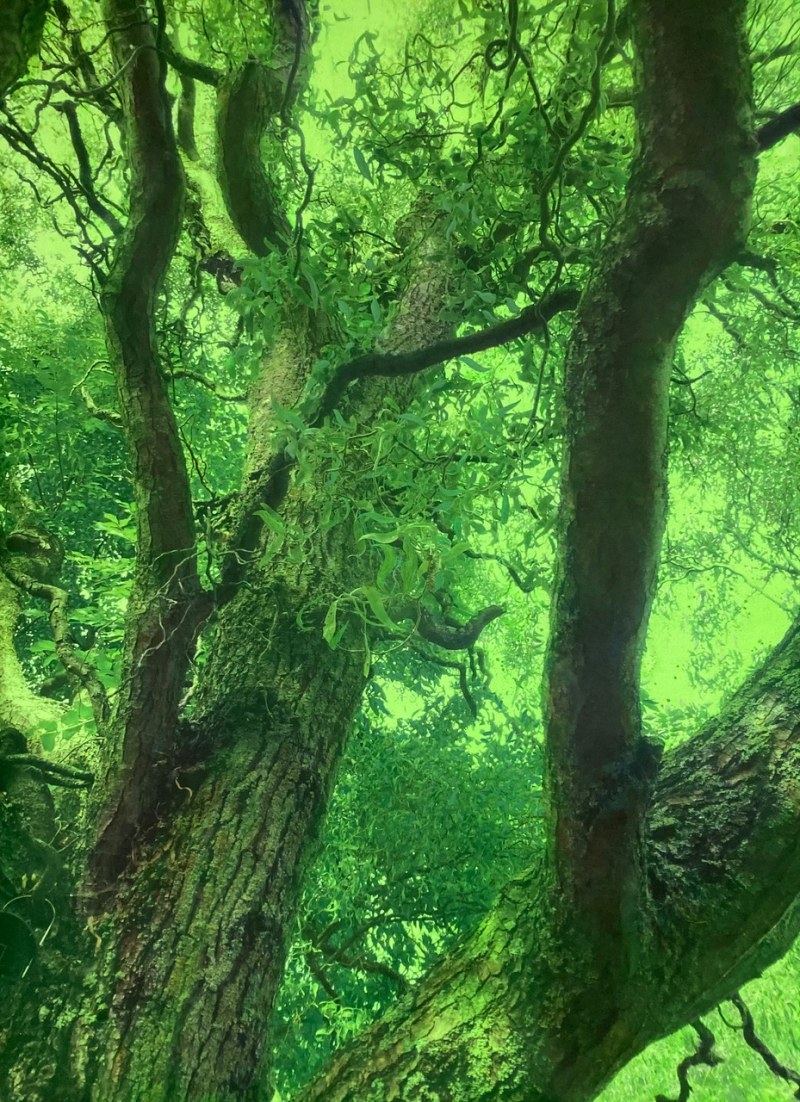
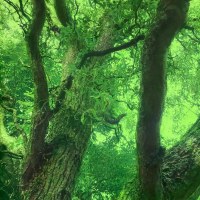
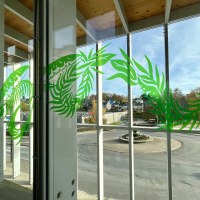
Le saule pleureur incarne une forme de romantisme profond, celui des jardins à l’anglaise : calme et retenu, délicat et poétique, à la fois mélancolique et apaisé. L’arbre de Djos Janssens, fixé à la façade, n’est pas celui que l’on imagine au bord d’un étang, surplombant un banc et invitant à la contemplation. C’est une image plongée dans un vert fluorescent, qui frappe la rétine, interroge par son artificialité et lui confère un arrière-goût chimique et troublant. Son format et son accrochage rappellent les procédés publicitaires, levant les regards des passants.
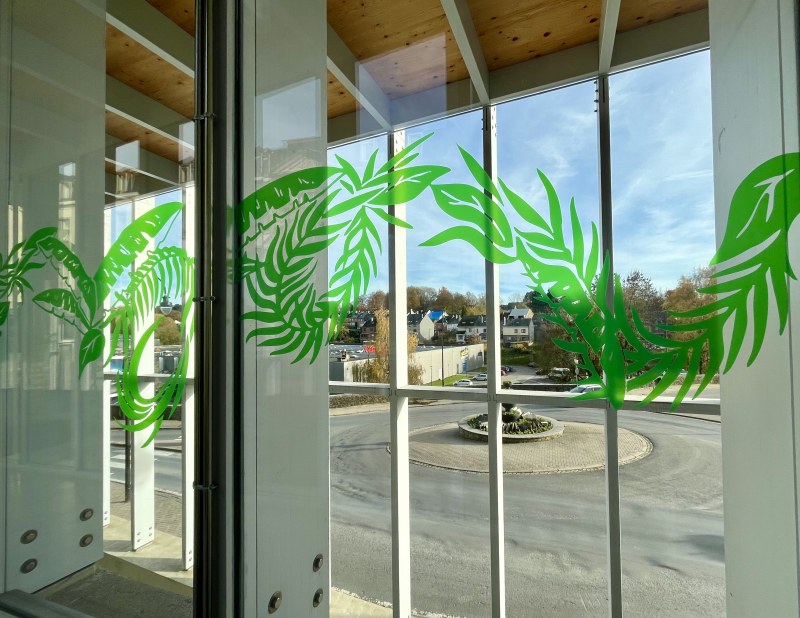
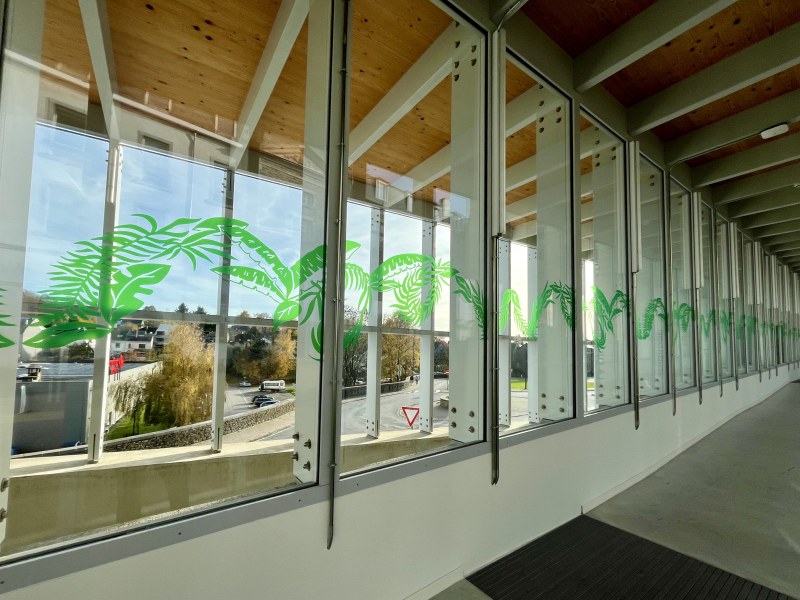
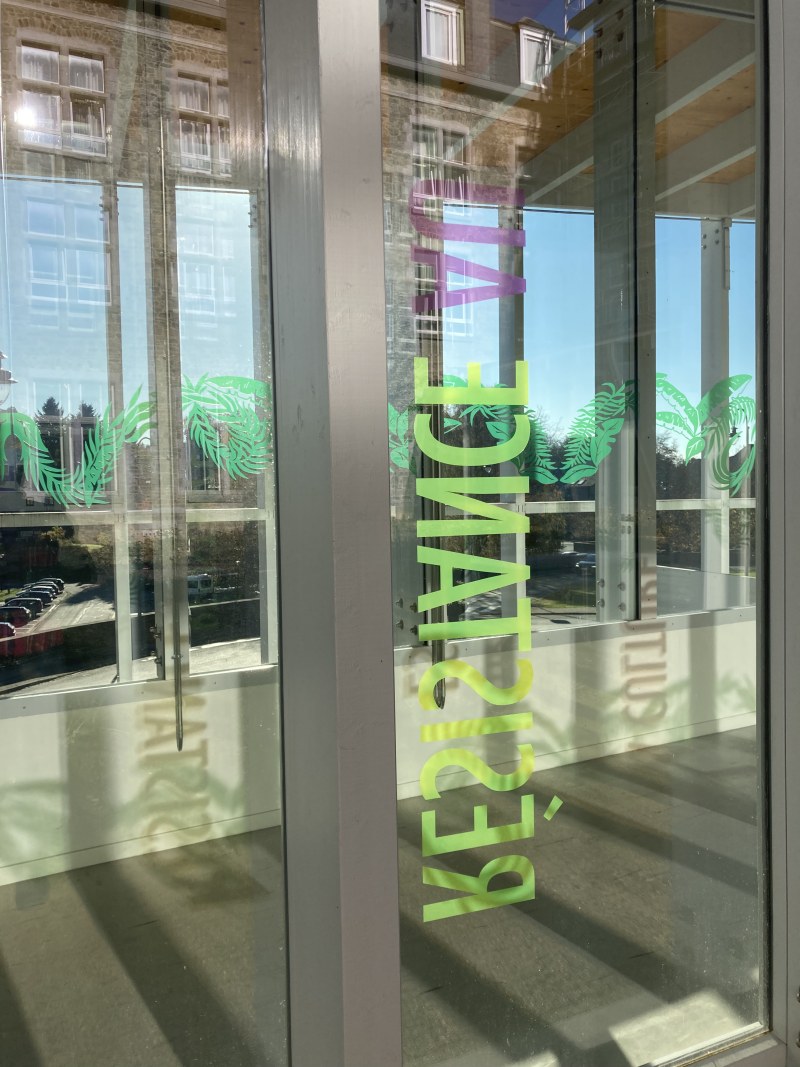
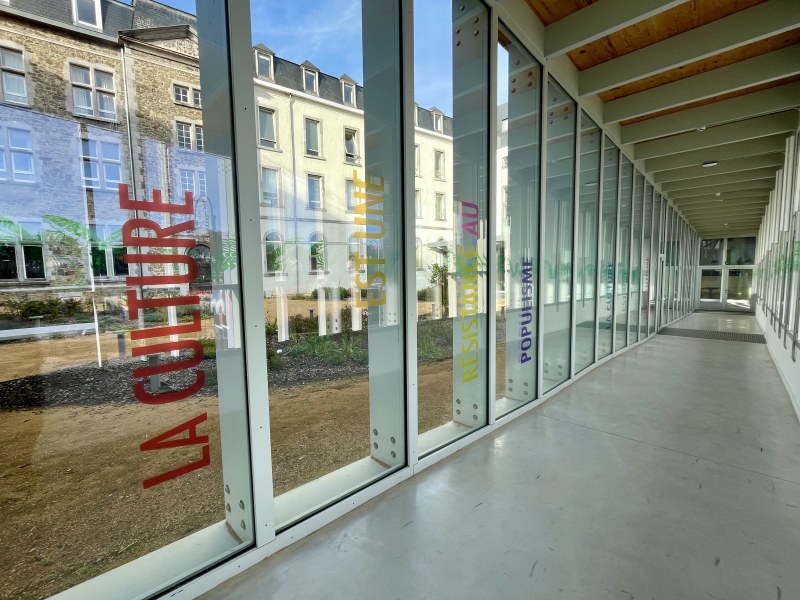
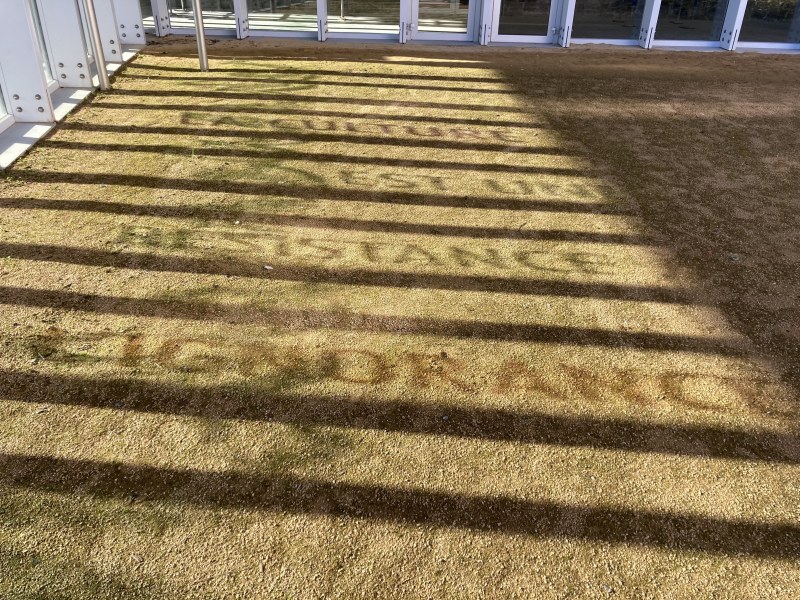
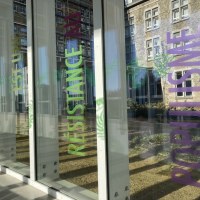
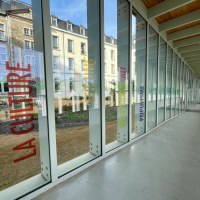
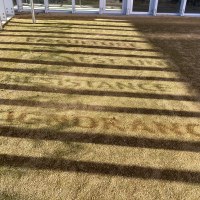
Dans la coursive, l’artiste rappelle en rythme l’urgence de la résistance, enracinée dans l’histoire de Bastogne et de sa population, qui a tenu bon face aux désastres d’une idéologie mortifère. La proposition est répétée plusieurs fois, inévitablement battue en rappel, dans un contexte nouveau. Ce rythme appelle et rappelle à la résistance pour la culture, tout en dansant et en ondulant le long de ce twist végétal.
Ces plantes évoquent une forêt tropicale aseptisée, transformée pour orner les bureaux des années 1980-1990, ou les lobbys bancaires d’un monde révolu. Importées d’un monde d’extraction sans recul, sans machine arrière, elles se déploient en mouvement et en oscillation de ce twist. Ces étendards seraient-ils encore plus grands et plus contrastés, plus présents, plus visibles, donneraient envie de les crier plus fort encore que les machines de guerre.
Hélène Jacques
TWIST – Contextual installation between text, colour and memory
On the occasion of the inauguration of the Pôle Culture de Bastogne, Djos Janssens presents TWIST, a temporary installation created specifically for this new cultural venue. This in situ work, visible from outside the building, captures the public’s attention while accompanying visitors in their movement through the space. It celebrates the diversity of the arts in a joyful, inclusive, and open dynamic.
The project was initiated in response to a call for proposals by the City of Bastogne as part of the opening of the Pôle Culture. L’Orangerie, a contemporary art space, invited Djos Janssens, whose contextual and socially engaged practice emerged as a natural choice.
Designed to engage in dialogue with the architecture, TWIST is based on the three founding pillars of Djos Janssens’artistic approach: colour, text, and context. By playing with these elements, the artist creates a space for reflection, sensation, and multiple interpretations.
The title TWIST refers to the idea of detour, spiral motion or reversal – a nod to creativity, freedom of thought, but also to Bastogne’s history and collective memory. The work pays tribute to the city’s American historical legacy, while asserting the need for new cultural narratives.
Through this creation, Djos Janssens highlights the fundamental role of culture as a driver of social connection, open-mindedness, and civic engagement. TWIST invites everyone to a sensitive, playful and poetic experience, embedded in the living context of the city. Through projects like TWIST, the Pôle Culture affirms its role as a vibrant, unifying platform open to the plurality of contemporary expressions.
L'Orangerie
The weeping willow embodies a profound form of romanticism, that of English landscape gardens: calm and restrained, delicate and poetic, at once melancholic and serene. The tree created by Djos Janssens, mounted on the façade, is not the one we might imagine standing beside a pond, overlooking a bench and inviting contemplation. Instead, it is an image immersed in fluorescent green, one that strikes the retina, challenges us through its artificiality and leaves behind a strange, unsettling chemical aftertaste. Its format and positioning evoke advertising techniques, drawing the gaze of passers-by upwards.
Along the walkway, the artist rhythmically recalls the urgency of resistance, rooted in the history of Bastogne and its people, who stood firm in the face of the devastation wrought by a deadly ideology. The gesture is repeated several times, inevitably returning like an insistent refrain, this time in a new context. This rhythm calls for, and reminds us of, the need to resist in defence of culture, while dancing and undulating along this vegetal twist.
These plants evoke a sanitised tropical forest, transformed into decorative features for offices in the 1980s and 1990s, or for the banking lobbies of a bygone world. Imported from a world of extraction, devoid of hindsight and with no possibility of turning back, they unfold in a movement, swaying and oscillating along this twist. Were these banners even larger, more contrasting, more present and more visible, they might inspire us to raise our voices and cry out even louder than the war machines.
Hélène Jacques